Friday, April 25, 2014

Political Cartoon

            This political cartoon was made in the 1906's when President John F. Kennedy was in office. It is explaining the time when Canada could not decide weather to use nuclear weapons. It was created by a Canadian for the reason of this on going debate among America and Canada. President John F. Kennedy and his administration were trying to persuade Canada for only excepting weapons from the United States. Thus, explaining the man who is Prime Minister Lester Pearson sitting down had a shot gun on top of his head. Prime Minister Lester Pearson did not seem to agree to President John F. Kennedy's plan but them later agreed to it. 

              In this political cartoon it was in the time when President John F. Kennedy was dealing with the problems in Cuba. There was going to be a nuclear war with Cuba due to Eisenhower plan that President John F. Kennedy could not stop. However, he did save the american people after all because he talked to Soviets even if they were are enemy. The U.S.S.R placed missiles in Cuba and that is when the United States felt threatened  so they put missiles in Turkey with the permission of President Kennedy. Then there was a negotiation between the U.S.S.R. and the United States which was achieved by diplomacy. this negotiation prevented a nuclear war which is the picture above. 


                 This political cartoon was created during President John F. Kennedy's presidency and it was about mid way of his presidency. The man responsible for the cartoon was Herbert Block. Throughout President Kennedy's presidency he had an ample amount of foreign affairs which her foreign policy concerns which most revolved around the Cold War. During Presidents John F. Kennedy's term the American-Soviet relations were not considered well there was great tension. The tension could then break in the form of the Cuban Missile Crisis. In the cartoon there are two men Kennedy and Nikita Kruschec who is a leader form the Soviet Union. Both are trying to keep the beast or animal that is a symbol for a nuclear war in a cage or to keep it contained. 

Wednesday, April 23, 2014

President John Fitzgerald Kennedy


          John F Kennedy was the most effective president throughout the entire Cold War. John F. Kennedy was not only a president he was also a war hero for the reason that the was a  involved in World War II. This gave him insight and understanding of what actually war was like. He got injured during his time in the war: however, this did not stop him form his aspersions. Once he had come back form the injury he went to school for law; however, he then realized that he wanted to become the president of the United States. He would then stop at nothing to become president due to the fact he felt that he would help progress and save America. He prevented a nuclear war during the Cuban Missile Crisis and forced the Soviet Union to withdraw its nuclear missiles from Cuba. President John F. Kennedy was effective for the reason that he had stopped a nuclear war that was engendering in Cuba because of the missiles that the U.S.S.R. had placed in Cuba. This war was going to turn into World War III; however, President John F. Kennedy had resolved the problem. This is the reason why President John F. Kennedy was most effective. 


           Even if President John F. Kennedy was influential he did not agree with some presidents before him such as President Eisenhower. He did not agree with President Eisenhower's plan which was to free Cuba from Castro and by freeing Cuba of Castro, freeing the entire Western Hemisphere of communism that the CIA had engendered. He felt that it would start a war yet he did not stop the processes of the plan due to the fact that it was too late. President John F. Kennedy also did not agree with President Nixon when he was befriending the Soviet Union. His plan was to end communism with the help of the Soviet Union's friendship. However, President John F. Kennedy did not agree with this because it would make the United States weak. Also he did not agree for the reason that it was not good for the nation neither was Presidents Eisenhower plan. 

Thursday, March 20, 2014

Dorothea Lange Gallery

       Dorothea Lange was well known for her photography during the time of the Dust Bowl and the Great Depression. Most of the nation of America was devastated by the tragedy like this little girl in the photograph. In the description Lange states "Resettled farm child, New Mexico, 1935" which indicates the the child and her family needed to move form their original setting to a new one. Her family was most likely affected by the Dust Bowl and forced to leave and move in to a home that was falling apart. The little girl looks as if she is depressed and disliked the move to New Mexico, she wants to be back to her old home but understands that their was no benefit in staying where they were. 
        The government did not help the people that were losing their farms like the family of this child, they were trying to make the nation stay afloat; thus, the poor families had to fend for themselves. The government needed to provide services to the ones in dire need yet families and other individuals were not receiving any help. The government needs to provide the people with medical care due to the Dust Bowls that would cause illness that could kill an individual. The only type of solution for the little girl and her family is to hope for the best and try to farm on this new land in order to make some money. 

Thursday, March 6, 2014

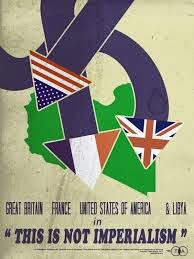
Imperialism in WWI


        There was an ample amount of reasons why the first World War occurred such as imperialism which basically means attaining an empire or a collection of territories. One country wanted to take over the other and monopolize the individuals who inhabited the area. With more land and territories under there absolute control of the country the will encounter copious power that would soon make then envied by the rest of the countries. The European nations ruled the smaller nations and competed with each other to amass more colonies. To obtain absolute power is to gather as many possible territories to be conquer and rule as Europe was doing with Africa in the "scramble for Africa" in the late 1800's. 


          Europeans in the mid of the 19th century were engaging in another rush for empire because it was necessary to get the materials for cheaper and a perception that the potential colonies were becoming more scarce.   Europeans were taking most of the territories and becoming powerful but France and Britain already had land in Africa and Asia. However, now Germany and Italy want in the pool in attaining more land to become robust as a nation. They wanted to gather raw materials and cheap labor just like the other countries because it was not fair for only some empires to get to a higher education.

         There was diplomatic Crisis between France and Germany in the early 20th centenary in fault of the scramble for empire. France wanted Morocco because of its location in northern Africa which was easy for France to manipulate.However, Germany did not want France to attain the land thus in 1906 Kaiser Wihelm II traveled to Tangier which he would promote Moroccan independence. It got the French government upset and in 1911 the French was trying to suppress a rebellion in Morocco but the German landed an armed vessel to "help" Morocco. It was a provocative move which was going to bring war with France and Germany. 

Wednesday, February 26, 2014

Progressive Characters

Theodore Roosevelt 


A. Explain the biographical ideas behind the character
        Roosevelt was born and raised in New York City, he was part of a wealthy family. However, as a child he was very ill and spent a lot of his time in his room reading which he considered his first love. Once he was older and stronger he let nothing stand in his way, he tried to live a life full of danger.
B. Explain the major legislation related to this character
       Some major legislation that Roosevelt conducted was the Big Stick Policy that he said, "A man should walk softly and carry a big stick" which s to utilize military and violence to control the counties tat needed to be controlled. Roosevelt Corollary was added to the Monroe Doctrine which was to keep European countries from taking over South and Central American countries. Then there was the Progressive Party that an independent political party dedicated to progress change which was later consider Bull Moose Movement in the press.
C. Describe how this character attempted to progress the nation
       Roosevelt was very patriotic American, he would do anything is in his power to see the United states progress. he strongly believed in manifest destiny which he consider that the U.S was the most "powerful and righteous" place on the planet. He also tried to make products (food) more healthy for everyone which is considered the Food and Drug Administration (FDA) in this modern day.
Woodrow Wilson 


A. Explain the biographical ideas behind the character 
       Wilson was not only the 26th president of the United States he was also a professor that an ample amount of students enjoyed. He taught history and political science after receiving his PH.D. at the University of Princeton which all started due to his love of books.He was also a man who was very ill at the end of his life and died after one of his major dreams did not pass the congress.
B. Explain the major legislation related to this character
       Wilson created a theory called Moral Internationalism stating that because America was strong, powerful and wealthy they should get involved with foreign affairs to help out the rest of the world. He also was involved in the Treaty of Versailles that would end WWI. Out of his theory he engendered 14 points which were progressive plans for the United States to be better.
C. Describe how this character attempted to progress the nation
       Wilson loved the nation so much that he kept the American boys out of war during the second World War. With in the 14 points Wilson stated that peace without victory, freedom of the seas, and the formation of the League of Nations which all in his mind proceeded to do good to America or make it progress. He believed that the League could end war, poverty, and hunger if only the countries would unite as one democracy.
Ida Terbel


A. Explain the biographical ideas behind the character 
      Tarbel came from a hard working family her father had three jobs two as a teacher and another as a wildcatter. She was taught as a young girl that she needed to work hard and let nothing bring you down not even failure. She was out raged when her father had lost everything due to John D. Rockefeller who stole the oil fields from the wildcatters. It only made her work harder, she attended school became a teacher but didn't feel it was fulfilling; thus, left and found that writing was going to make an impact in history.
B. Explain the major legislation related to this character
      There was a grudge that Tarbel had toward John D. Rockefeller for scamming all of the hardworking people. She never did forgive him and she started to do some research on him and his company to find some kind of dirt. She was considered a muckraker due to the fact the she would write about political people and there unequal treatment towards others, she wrote a lot about Rockefeller and uncovered many truths Her book about him became a best seller quickly.
C. Describe how this character attempted to progress the nation
       Tarbel's bravery in standing up and having freedom of speech during her time helped the nation progress because i gave women a sense of hope. The Woman's Right's Movement looked up to her because she had done things that many women would not think of doing. Alice Paul asked her if she would be apart of the movement but you disagreed with parts of the movement because you felt that it was damaging the traditional roles of women yet she did not write bad abut them in any of her books or magazines.
Robert La Follette


A. Explain the biographical ideas behind the character 
     La Follette was born and raised in the country side of Wisconsin, his father was one of the hardworking farmers. As a young child he understood what working hard meant and never forgot the struggles of the poor. Once he had graduated the University of Wisconsin he became District Attorney and eventually he was elected a member of the House of Representatives. In the house he viewed the unjust politicians and wanted the Democrats and Republicans to change their tactics.
B. Explain the major legislation related to this character  
      La Follette engendered the idea of initiative which meant that people could make or pass a law without the help of the legislature which mean that the politicians time was limited in office before the next election. The Wisconsin Idea that he also created was to help the people by the government giving back to them and giving the Americans direct democracy.He was elected Senator of the state of Wisconsin and during his tern Wilson was president and he was one of he few that spoke out against going into war with.
C. Describe how this character attempted to progress the nation
     La Follette was very opinionated and he did not care if people waned to hear them or not, with that attitude he gave his speeches that would accuse individuals with being corrupt. His speeches usually contained concepts that an ample amount of people started to become his enemy. He believed that both Americans and immigrants had the duty to keep the values that drove Americas spirit during the countries war days.

John D. Rockefeller


A. Explain the biographical ideas behind the character 
      Rockefeller was the second child born in upstate New York and they were a well off family but not very wealthy. When the crops got expensive his father sold the farm and when to Ohio with the family which was outside of Cleveland. After he went to Folsom Mercantile College he finish a book keeping course, then he was an assistant book keeper at the Hewitt and Turtle Firm. Then he formed his own business with a partner which he later turned it into a oil refinery business remaining it Standard Oil.
B. Explain the major legislation related to this character  
    Rockefeller was a master of monopoly which meant that he had control of most of the Ohio region with no competition. He learned to control the means of production completely dominating the oil business in Ohio. Pricing highly was very accurate during that time because they wanted to gain more money as Rockefeller tried to accomplish and it was a bones for him because there was no one going up against his company to make him loose money.
C. Describe how this character attempted to progress the nation
     Not only did Rockefeller engender his own company from the ground up which he schemed away from honest people he would rob them from there money. He would exploit the workers but he had achieved his American dream, however it was soon destroyed and forced to break into six different companies.  After he became a philanthropist and gave his money away to organizations due to the books of Ida Tarbel.
Eugene V. Debs


A. Explain the biographical ideas behind the character 
      Debs was born into a poor yet intellectual family in Terre Haute, Indiana, they were German. Due to the fact that he was an immigrant it was difficult but his father struggled through and opened a general store, they also became trusted members of the community. After finishing high school he went to work at the Union Pacific Railway but left the job to do union work and became a union activist.
B. Explain the major legislation related to this character  
     Debs engendered the American Railway Union to help the rights of the workers and he opened a publishing company that to get the voices of the workers that were unheard. The ARU and himself stood behind the Pullman Strike even if he was jailed. The Great Railway Strike was one of his greatest accomplishments which showed what he was giving up for the workers rights.
C. Describe how this character attempted to progress the nation
    Debs was a progressive reformer because he was trying to help the workers when he created the ARU to his endorsement of the Woman's Suffrage Movement. He was so motivated to the movement that he even got jail time and was proud of it. However, he died alone in his home after meeting the President Harding on the invitation to the White House due to his dedication.

Thursday, February 20, 2014

Irish

           The Irish started to migrate to the United States by the 1820's and one main reason was because of the Potato Blight in 1845. The Potato Blight dealt with the potato harvest that stated to engender fungus, it spread like wild fire through the crops. In about 5 years there was about a million Irish individuals dead from the fungus potato. This is what spiked the jolt in the Irish to leave Ireland and acquire a fresh new start in America. Although, there was still a growth of immigration before the tragedy in the early 19th century due to living conditions, religious conflicts, economic conditions, and lack of political involvement  the Irish wanted to obtain a new life style where they could actually look forward to a future.
      The Irish settled in the middle colonies, particularly in Pennsylvania due to the fact that it was a major port of debarkation. Basically a debarkation is a place where an ample amount of trade or business occurs. However, in a few decades the Scotch-Irish were moving southward to the Great Philadelphia Road which was considered the major road in actually starting a new like in the southern colonies. By the 1760' The Irish had reached South Carolina once they kept moving down Virginia's Shenandoah Valley and then onto North Carolina Piedmont region. These individuals most likely became Indian fighters and frontiersmen. 

View Larger Map
        The United States government policies and programs affected the Irish immigration patterns such as their lifestyle, it had changed dramatically. In Ireland the lifestyle consisted of a life that was mainly farming and rural work, industrialization had not hit them like the United States. It was difficult for the Irish to adapt to the new line of work because they had never worked in a factory before. Also they were very poor in Ireland and were a bit more enriched financially in America but the prices of objects were high which didn't help them. The Irish were pushed from there customs and tried to be more "American" because they need transition to there new lifestyle.
The Americans were not very found of any newcomers that would come to the United States; thus, the Irish were no exception in this sad truth about the American nation. They felt threatened by the “unique” individuals because these men were skilled  workers while most Americans were just regular workers and wanted more pay. The Irish were not accepted by the Americans they would be generalized with the African Americans due to the fact of the low social and economic status. Both of the ethnicitys felt that were they worked they were being treated unfairly that the white people were taking advantage of them. Also they did not enjoy each other company they shared ones hate for one another. They could have united and tried to change things to try make the workplace or treatment better. 
          The United States government policies and programs affected the Irish assimilation when they had came to make a new life in this new nation; however, their new lifestyle dramatically changed. In Ireland the lifestyle consisted of a life that was mainly farming and rural work, industrialization had not hit them like the United States. It was difficult for the Irish to adapt to the new line of work because they had never worked in a factory before. Also the living/ housing situations were the Irish had to live they were crowded and were section houses. It meant that the Irish were cramped into one bed room with about 2 families in each tiny room and there was about 10 families per building. These places and many others that were from Ireland were not clean or acquired the full health code, Americans felt that the Irish did not deserve the cleanliness of the streets or homes they deserved scum.
         The economic conditions impacted the immigrants experience because they were low in the social latter, they came to this county in hopes of a better life. In reality it was promised that the Irish were going to have a job and a home in America but it did not specify what exactly the Irish were going to obtain. The Irish
would get the most dangerous jobs that usually Americans wanted to avoid like servants, domestic workers, coal miners, build canal and construct railroads. In West Virginia the coal companies felt that they owned the Irish workers that were acquiring there product. However, in further generations the Irish started to climb the social latter due to education. They would become policemen, firemen, and teachers, the Irish started to become weather. 
       The cultural heritage affected the Irish placement of settlement due to the fact that they had different customs but they gained some acceptance form the Americans when they started to for get there traditions. However, the Irish did not mind because they were free and could practice there religion not like in Ireland. For many years the Irish in Ireland were controlled by Britain, they would have to follow there instruction and decisions. In the United States there was an ample amount of Irish living there and it made them obtain a powerful political force. The Irish influenced the Democratic Party and the Catholic Church. The Irish gave more to America than just money with the workplace it gave them political individuals that would run the county. For instance, the late President John F. Kennedy who only wanted to make America a better place for all individuals not only the people that were on top of the social latter. 

Tuesday, January 21, 2014

David Graham Phillips

            David Graham Philips ,a brilliant author, was born on October 8, 1867. He was the son of a politician David Graham Phillips Senor and his mother Margret Lee. His family was not rich, he was categorized as middle class;however, even if he did not an ample amount of money he still acquired a higher level of education. He attended two colleges Indiana Abury College which in modern times is called DePauw University and then he transferred to the College of New Jersey which is recognized now as Princeton. He was finished with ll his education by the year 1887. After he graduated he immediately stated to work at a newspaper as a reporter which was in Cincinnati with the Cincinnati Times Star. Then he moved to New York to widen his experience as a writer/ reporter in the year of 1890. 
          Once he moved to New York he had a reputation for writing, he had a gift and by 1902 he was rising to the editorial rank of the New York World. However, that was his last year writing on that newspaper because he started to write novels but his first one was The Great God Success published 1902. In his later years Philips was considered a muckraker which is either a journalist, novelist, and/or critic who were trying to expose the abuse of business and the corruption in politics through their writing. He was well known for his scandalous articles about the corrupt government in the U.S. Senate which was published in the Cosmopolitan magazine in 1906. Philips was also a writer for the Saturday Evening post and other journals that were popular during his time.
         Philips articles and novels always engendered controversy throughout the city because he was one of the first to state the corruption of the government. His novels were potent but at the same time they were unrefined or very blunt, there was no such type fluff that made the government look "good". The main ideas of his novels considered of corrupt influences in society and general social problems. He had published many books before his death. He did not die of old age, he died because he was brutishly murdered by a musician. The musicians motives were that he thought that Philips had wrote and stated allegations about his family.